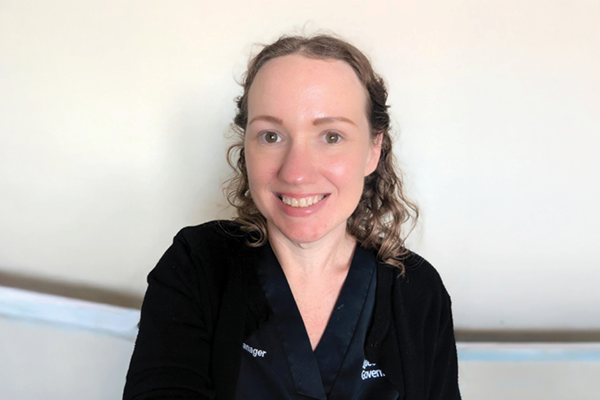
Karlee Excell never planned to become an oncology nurse.
“Oncology chose me in a fairly dramatic way,” she says.
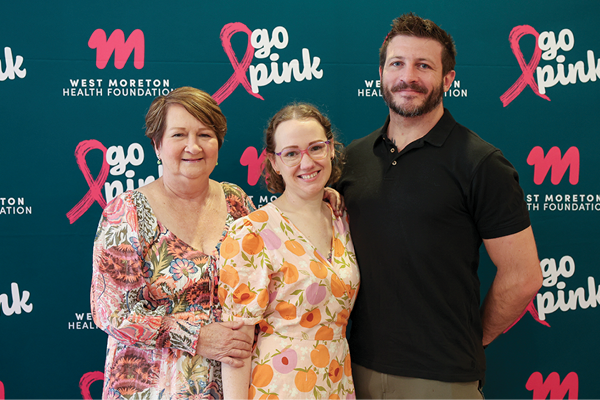
Today, Karlee is Nurse Unit Manager of the Oncology Day Unit at Ipswich Hospital. At the Go Pink 2026 launch breakfast, she shared the story of how she got there.
A lump found by accident
In 2008, Karlee was a 21-year-old nursing student who wanted to be a midwife. Like most people her age, she felt fairly invincible.
Then one day she scratched her breast and felt a lump. She assumed it was a cyst and left it. A couple of months later it was still there and seemed bigger, so she went to her GP. Given her age, he thought it was probably benign, but he sent her for an ultrasound and biopsy anyway.
“I genuinely feel like I owe that man my life,” Karlee says. “He is still my GP today.”
Five days after her diagnosis, Karlee turned 22. Surgery followed, and when she went back for her results, her surgeon told her cancer had been found in four lymph nodes. She would need a mastectomy.
Karlee and her mum walked back out into the breast clinic waiting room.
“I looked around at women in their 60s and 70s,” she says. “I had literally just turned 22, and suddenly I was being told I was going to lose my breast. That was the first time I really fell apart.”
A new direction
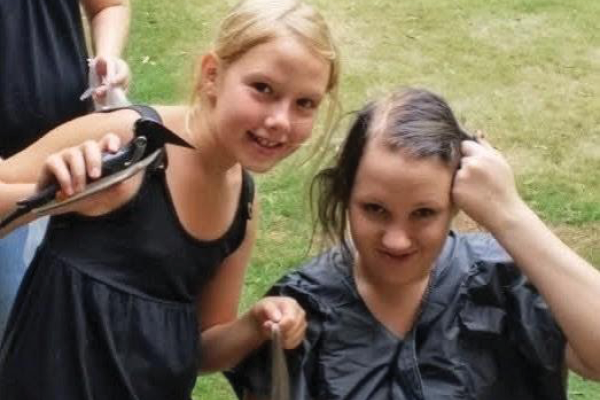
Karlee sat her end-of-year exams, had her mastectomy the next day and started chemotherapy on New Year’s Eve 2008. When her hair fell out, her little brother and cousins helped shave it off. They called it the “shearing ceremony”.
After her second treatment, she was admitted to an oncology ward with fevers. That stay changed the course of her life.
“The nurses were incredible,” Karlee says. “It wasn’t the sad, frightening place I had imagined. They knew their patients, laughed with them and knew the practical things that actually helped.”
By the time she left hospital, she knew she wanted to be an oncology nurse. She went back to uni during treatment, and 10 days after her final round of chemotherapy she was on placement on an orthopaedic ward, “bald, with no eyebrows or eyelashes”. Less than two years after her diagnosis, she graduated and began working as a registered nurse in haematology and bone marrow transplant.
Life after treatment
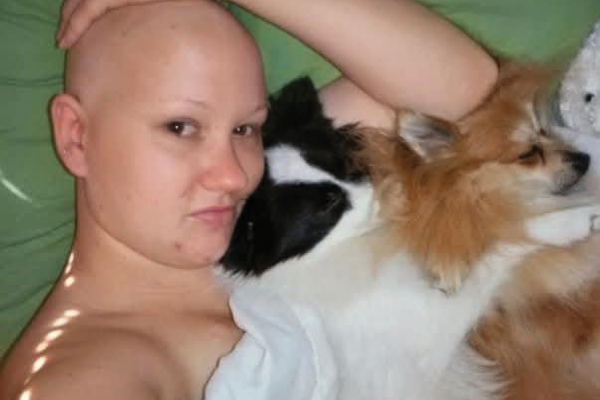
For Karlee, finishing treatment wasn’t the end of cancer.
“In some ways, the years afterwards were much harder,” she says.
Every headache felt like a brain tumour, and every backache felt like the cancer had spread.
“I used to describe it as feeling like my body was a bomb and I was just waiting for it to explode.”
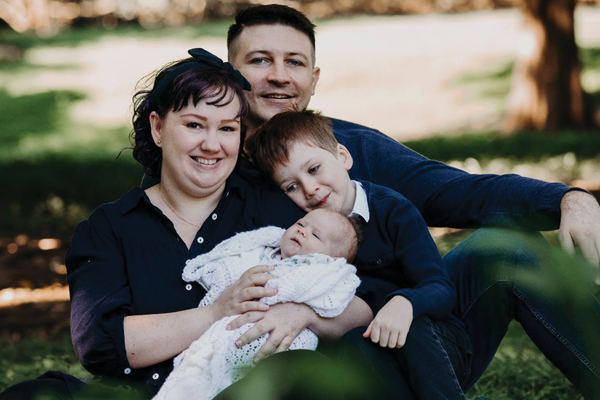
With the support of her family and her care team, she slowly rebuilt herself. She and her husband Dan went on to have two children, something Karlee had been told might not be possible.
“Becoming a mum helped me rebuild trust in my body, and slowly cancer stopped being the main character in my life,” she says. “It became part of my story rather than the whole story.”
Nine years after her diagnosis, Karlee joined the oncology team at Ipswich Hospital. Last year, she became Nurse Unit Manager of the Oncology Day Unit.
What Go Pink means on the ground
“Breast cancer awareness isn’t just about pink ribbons,” Karlee says. “It’s about what happens on the ground.”
“It’s about whether someone can access screening. Whether the equipment we use is comfortable and modern. Whether one of the hardest days of their life is made just a little easier.”
Go Pink supporters have helped make that difference across West Moreton. Their support introduced SCOUT wire-free breast localisation technology, making West Moreton one of the first public hospital services in the country to offer this less invasive, patient-friendly option. Supporters have also funded mammography chairs that make screening more comfortable, a mobile stereotaxy chair that’s bringing breast screening services to regional communities, and upgrades to patient lounges and treatment rooms.
Community support also reaches Karlee’s own unit. Thanks to the Foundation and the Kalbar Sunflower Festival community, the Oncology Day Unit recently signed off a new telehealth machine for its TeleOncology service. It was the biggest item on the unit’s wishlist. The machine connects the Ipswich team with patients and nurses at rural hospitals, so more people can have treatment closer to home.
The wishlist still includes iPads and headphones for patient education, and a blanket warmer for the oncology and palliative care ward.
“If you’ve ever spent hours sitting in a treatment chair, feeling cold, anxious or unwell, you understand that sometimes the little things aren’t little at all,” Karlee says.
“Fundraising becomes equipment. It becomes education. It becomes comfort.”
Karlee’s message this October
Karlee turns 40 soon, and she’s looking forward to her first BreastScreen appointment.
“Some people celebrate turning 40 with champagne or an overseas holiday,” she says. “Apparently, I’m celebrating with a mammogram.”
BreastScreen Queensland offers free screening mammograms for women aged 40 and over.
Karlee’s advice is simple, whatever your age.
“Know what is normal for your body. If something changes or doesn’t feel right, please get it checked.”
If you notice a change, see your GP, just as Karlee did at 21.
To anyone going through breast cancer, Karlee says: “You don’t have to be inspirational every day. Sometimes getting through today is enough.”
And to the people beside them: “Feed them. Drive them. Sit beside them. Make them laugh when you can. Hold their hand when you can’t. Just keep showing up.”
“I never became the midwife I thought I would be,” she says. “Life had a very different plan for me. But I think I ended up exactly where I was meant to be.”
Go Pink your way
This October, you can support breast cancer care in West Moreton by grabbing a raffle ticket, shopping the merch range or joining a local event. Find out how to get involved.